
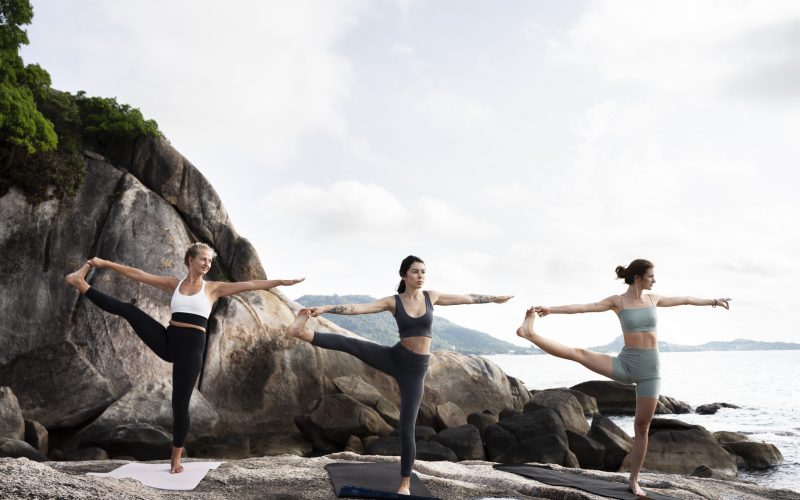
Breath-centered practices combine the attentional focus of Meditation with the movement of yoga, offering a practical way to cultivate awareness in daily life. This article explores how these practices work, how they can be integrated into routines, and what participants typically experience. In places like Koh Phangan, Thailand, where calm surroundings support focus, breath-centered practices are often incorporated into Wellness retreats and studio classes. The goal is not to achieve dramatic results but to provide a simple, accessible method for engaging with breath, body, and attention throughout the day.
What Is Breath-Centered Meditation?
Breath-centered Meditation involves using the rhythm of the breath as an anchor for attention. Instead of trying to control thoughts, participants simply observe inhalation and exhalation. This focus on breath helps stabilize the mind and reduces mental wandering, creating space for clarity and presence.
Even a few minutes of mindful breathing can help participants notice tension or areas of shallow breathing, bringing awareness back to the body.
How Breath Is Used in Yoga
In yoga, breath guides movement. Inhalation often corresponds with expansion or upward movement, while exhalation is paired with folding or release. This coordination helps maintain steady pacing, prevents strain, and enhances the sense of flow in physical practice.
Paying attention to breath during yoga also supports proprioception—the awareness of the body in space—which can make movements more efficient and safe.
Combining Breath with Movement and Stillness
Breath-centered practices often integrate movement, stillness, and observation. For example, a short sequence of yoga poses may be followed by seated or lying Meditation, allowing participants to notice how breath supports both motion and rest.
The combination encourages subtle awareness: noticing shifts in posture, tension, or energy without judgment. This approach is grounded in observation rather than interpretation, making it suitable for beginners.
Benefits of Daily Practice
Breath-centered Meditation and yoga can be incorporated into short daily sessions, making the practices accessible even for people with busy schedules. Simple routines, such as five minutes of mindful breathing in the morning or a short yoga sequence in the evening, can help anchor attention and create a sense of structure.
Regular practice does not promise emotional breakthroughs, but it can help people notice patterns in breath, posture, and tension, fostering self-awareness and presence in everyday life.
Practical Tips for Beginners
For daily practice, comfort and simplicity are key. Wearing flexible clothing, finding a quiet space, and choosing a brief, consistent timeframe are usually sufficient. Breath-centered routines do not require specialized equipment or advanced skill.
Beginners can focus on observing the natural rhythm of the breath, coordinating it lightly with gentle movement, and pausing whenever attention or energy wanes. There is no “correct” experience, only noticing what arises in the body and mind.
Integrating Practice into Everyday Life
One of the main advantages of breath-centered practices is their portability. Awareness of breath can be applied while walking, during short breaks at work, or while transitioning between activities. This accessibility makes breath-centered Meditation and yoga practical tools for daily wellness rather than activities confined to studios or retreats.
In Koh Phangan, participants often combine these practices with natural surroundings, such as beaches or forested areas, which naturally reinforce presence and calm.
In conclusion
Breath-centered Meditation and yoga provide a simple, practical framework for daily life, emphasizing attention, body awareness, and rhythm rather than specific outcomes. In settings like Koh Phangan, the natural environment supports focus and integration, though the practices can be adapted anywhere. Sessions offered by Breath Body Balance reflect this grounded approach, highlighting clarity, choice, and gentle guidance. By observing breath through movement and stillness, participants can cultivate awareness that extends beyond formal practice into everyday routines.